
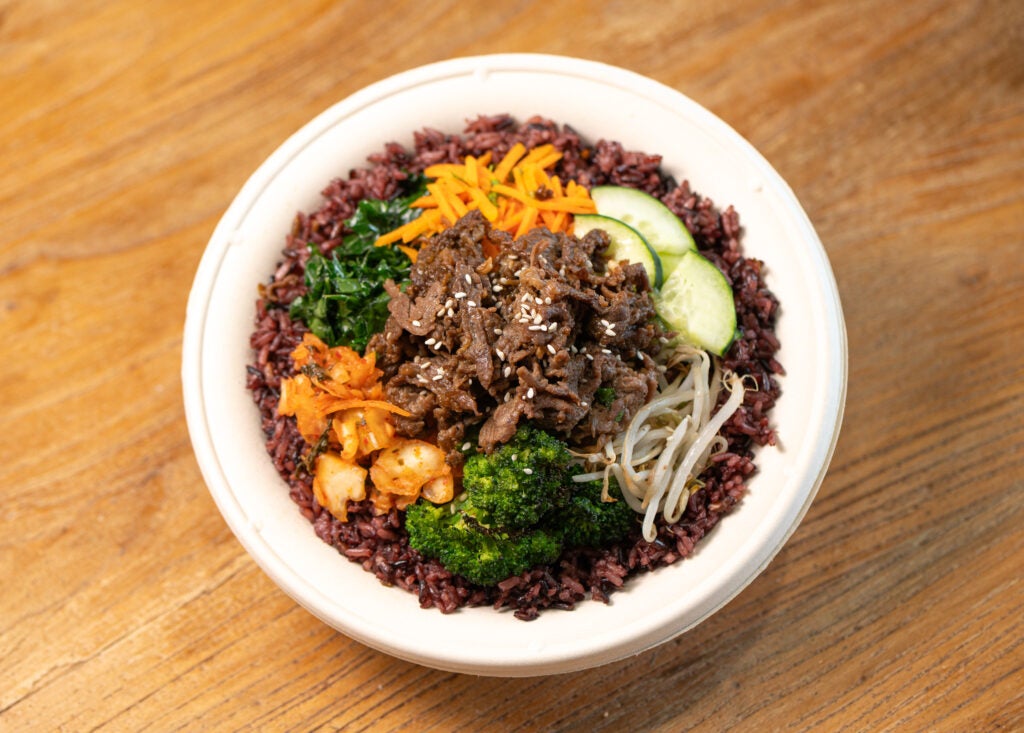
Bibimbap sauce is the red sauce you spoon over a rice bowl right before you mix it. Most people assume it is gochujang straight from the jar. It is not, and that is the single most useful thing to know about it.
Gochujang is the base. Bibimbap sauce is gochujang that has been thinned, sweetened and loosened with sesame oil so it coats every grain of rice instead of sitting in a stubborn lump on top. Here is what goes into it, what it tastes like, the ways it actually gets used, and how to get the same flavor on a BIBIBOP bowl without making anything.
What is bibimbap sauce?
Bibimbap sauce is seasoned gochujang. In Korean it is called yangnyeom gochujang, which translates almost literally: yangnyeom means seasoning, gochujang is the fermented chili paste.
The distinction matters because the two behave differently. Gochujang out of the tub is thick enough to hold its shape on a spoon. Drop that into a bowl of rice and vegetables and you get streaks of concentrated paste and stretches of plain rice. Thin it and it distributes.
Korean cooks disagree about how far to take this. Some add nothing but water and a little sesame oil. Others build a full seasoning with garlic, vinegar and toasted sesame seeds. Both are correct. The floor is gochujang plus something to thin it.
What goes into bibimbap sauce
Five things, and only the first is mandatory.
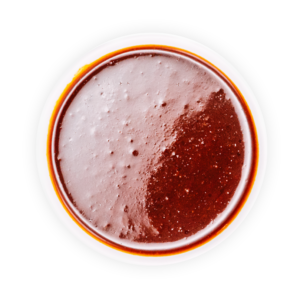
Gochujang
The base, and the only ingredient you cannot swap out. It is a fermented paste of red chili powder, glutinous rice, fermented soybeans and salt. It brings heat, salt and a deep savory backbone all at once, which is why the sauce needs so little else.

Toasted sesame oil
Richness and aroma. Use toasted, not plain. Plain sesame oil is close to neutral and will do nothing for you here. Toasted is the one that smells like a Korean kitchen the moment it hits the bowl.
Water
The part everyone skips. Water is what turns paste into sauce. Without it you are stirring a bowl of rice against a spoonful of something that will not spread.
Sugar
Gochujang already carries sweetness from the fermented rice in it, so this is a small adjustment rather than a main ingredient. It rounds off the salt.
Garlic, vinegar and toasted sesame seeds
Optional, and the reason two homemade versions can taste noticeably different. Minced garlic adds bite. A splash of rice vinegar cuts the sweetness and makes the whole thing taste brighter. Sesame seeds are mostly texture.
What does bibimbap sauce taste like?
Sweet first, then savory, then heat, in that order.
The sweetness is fermented rather than added, which is why it tastes rounder than a sauce with sugar stirred into it. The savory depth comes from the soybeans in the gochujang and reads a lot like miso. The heat arrives last, sits on the front of the tongue and fades instead of building.
It is milder than people expect. Bibimbap sauce is not a hot sauce, and a well made batch should let you taste the vegetables underneath it rather than erasing them.
How bibimbap sauce is used
It is a finishing sauce, not a cooking sauce. It goes on at the end, at the table, and it is stirred through rather than cooked into anything. That one habit explains most of where it turns up.
On the bowl it was made for
Spooned over bibimbap just before eating, then mixed until the rice is evenly colored. The sauce is what pulls a bowl of separate toppings into one dish.
On any rice or grain bowl
Nothing about it is specific to bibimbap. Rice, vegetables and a protein is the pattern it works on, which is why it ends up on weeknight rice bowls that are not Korean at all.
As a dip
Served alongside raw or steamed vegetables, dumplings and lettuce wraps. The traditional wrap sauce is its close relative ssamjang, which is built on doenjang and gochujang together.
Thinned into a dressing
More water and a little extra vinegar turns it into a dressing for cold noodles, slaws and cucumber salads. The same seasoned gochujang idea runs through bibim guksu, Korea’s spicy mixed noodles.
Outside Korean cooking it behaves like any other chili condiment with sugar and sesame in it. Fried eggs, roasted potatoes, grain bowls, burgers and tacos all take it well.
One rule, whatever you put it on. Start with less than you think. You can always add more, and once it is mixed through rice you cannot take it back out.
The variations you will see
The gochujang version is the default, and it is what most people mean by bibimbap sauce. The other three are what Korean households make when the default is not what they want, and they are worth recognizing if the sauce in front of you is not red.
Classic gochujang
Gochujang, toasted sesame oil, sugar, water, and usually vinegar, garlic and sesame seeds. Sweet, savory and moderately spicy. This is what most people mean by bibimbap sauce.
Doenjang
Fermented soybean paste in place of the chili paste, loosened with water and sesame oil and sweetened with honey. No heat at all. Earthy and much funkier, and it suits a mushroom or vegetable bowl.
Soy sauce
Soy sauce, sugar, sesame oil, garlic and sesame seeds. Salty and savory with nothing spicy in it, which makes it the version to hand a child. Use tamari if gluten is a concern, because most soy sauce is brewed with wheat.
Yakgochujang
Gochujang cooked down with ground beef until the meat almost disappears into it. Richer and less sharp than the raw version, and it turns the sauce into something closer to an ingredient than a condiment.
Is bibimbap sauce gluten-free?
Not automatically, and this is worth checking every single time.
Traditional gochujang uses barley malt powder to convert the rice starches into sugar during fermentation, and barley contains gluten. Plenty of commercial jars also list wheat flour outright. A tub off a grocery shelf is not gluten-free unless the label says so.
The soy sauce version has the same problem for the same reason. Most soy sauce is brewed with wheat.
BIBIBOP’s gochujang is gluten-free, because the entire kitchen is. Every location is certified through the Gluten Intolerance Group as a Validated Gluten-Free Safe Spot, and BIBIBOP uses tamari rather than soy sauce throughout the menu. Tamari is brewed without wheat. That one swap is a large part of how a Korean menu stays gluten-free at all. More on how that works: Behind the Scenes: How We Ensure Gluten-Free Dining.
Making it at home
If you do want to make it, the classic proportion scales to roughly four bowls: 4 tablespoons gochujang, 1 tablespoon toasted sesame oil, 2 teaspoons sugar and 1 tablespoon water. Stir until it is glossy and pours off the spoon in a ribbon. From there, 1 teaspoon of rice vinegar adds brightness, 1 teaspoon of minced garlic adds bite, and a spoon of toasted sesame seeds adds texture.
Two things worth knowing. Gochujang brands vary in thickness and an opened tub dries out, so treat the water as a range rather than a fixed measurement. And mix the sauce before you build the bowl, because adjusting it once it is spread across rice is not really possible. It keeps one to two weeks in the refrigerator.
How to get the same flavor at BIBIBOP
BIBIBOP does not serve bibimbap, and it does not serve bibimbap sauce under that name. What it does serve is Gochujang as one of five sauces, at 70 calories a serving, and a bowl you build the same way you would build a bibimbap at home.
Rice base, a pile of seasoned vegetables, one protein, sauce over the top, mixed before eating. Gochujang is the traditional finishing sauce and it is on the line. The order of operations is the same.
BIBIBOP’s Gochujang is served as a finishing sauce rather than pre-thinned into a yangnyeom gochujang. And the vegetables are prepared BIBIBOP’s way rather than as individually seasoned namul.
If you want the closest thing to a bibimbap bowl on the menu, the build is straightforward. Start with White Rice or Purple Rice. Add Roasted Sesame Broccoli, Kale, Carrots, Bean Sprouts and Kimchi. Choose Korean BBQ Beef, which is already sweet and savory and runs in the same direction as the sauce. Finish with Gochujang and mix it through before the first bite.
Korean BBQ Beef and Steak are two different proteins on the menu, not the same cut prepared two ways, so pick deliberately.
Bibimbap sauce FAQs
Is bibimbap sauce just gochujang?
No. Bibimbap sauce is gochujang that has been thinned with water and seasoned with toasted sesame oil and sugar, usually with garlic, vinegar and sesame seeds as well. Gochujang straight from the tub is too thick to spread through a bowl of rice.
What is bibimbap sauce made of?
Gochujang, toasted sesame oil, sugar and water at minimum. Most recipes add rice vinegar, minced garlic and toasted sesame seeds.
Is bibimbap sauce spicy?
Mildly to moderately. The heat sits on the front of the tongue and fades rather than building. Thinning the gochujang also dilutes it, so bibimbap sauce is usually milder than the paste it came from.
Is bibimbap sauce gluten-free?
Not reliably. Many commercial gochujang products contain barley malt or wheat flour, and the soy sauce version is usually brewed with wheat. Check the label, or use a certified gluten-free gochujang and tamari in place of soy sauce. BIBIBOP’s Gochujang is gluten-free because every BIBIBOP kitchen is certified gluten-free.
How long does homemade bibimbap sauce keep?
One to two weeks in an airtight container in the refrigerator. It may thicken as it sits, so loosen it with a little water before using it again.
What can I use instead of gochujang?
Doenjang makes an earthy version with no heat. Soy sauce or tamari makes a salty, savory version that children usually prefer. Neither tastes like the original, but both are traditional in their own right.
Does BIBIBOP have bibimbap sauce?
Not under that name. BIBIBOP serves Gochujang as one of five sauces, alongside Teriyaki, Yum Yum, Sesame Ginger and Spicy Sriracha. Gochujang is the traditional base of bibimbap sauce, so it is the closest thing on the menu.
Try it on your next bowl
Bibimbap sauce is worth knowing about whether or not you ever make a jar of it. If you would rather skip the shopping entirely, build a bowl and finish it with Gochujang, which costs nothing extra.
Find a BIBIBOP near you and order today. New to BIBIBOP? Join BIBIBOP Rewards and your first bowl is on us with a minimum $5 spend.