
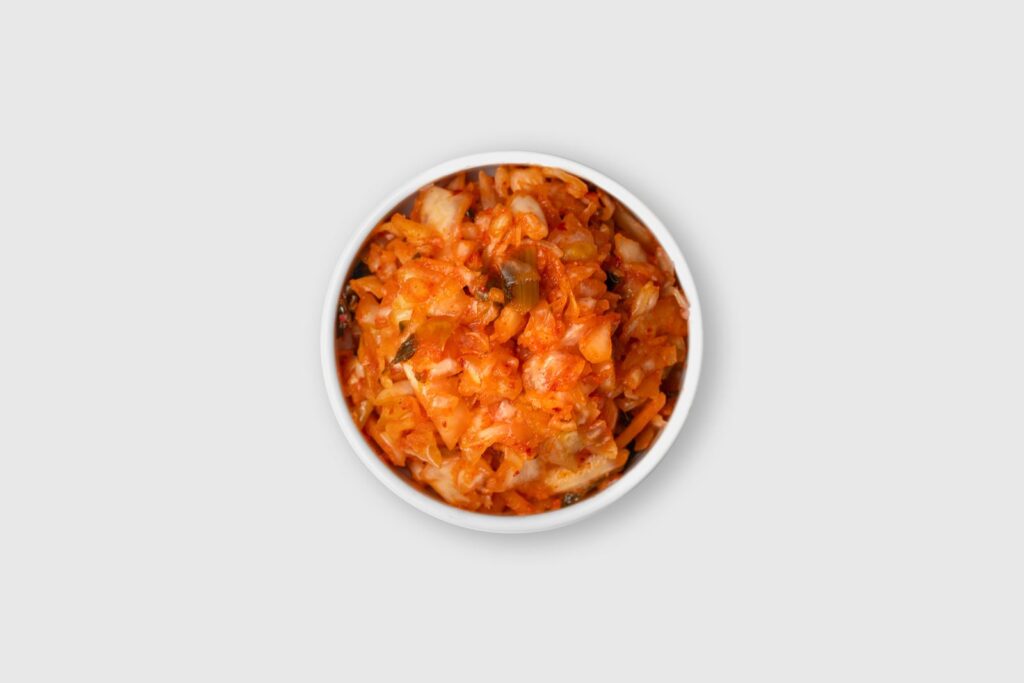
Kimchi is salted, seasoned vegetables that have been left to ferment. Most of the time that means napa cabbage packed with chili, garlic, ginger and scallion, then aged until it turns tangy, savory and alive with flavor.
That is the short answer. The longer one is more interesting, because kimchi is not a single dish. It is an entire category of food with hundreds of regional versions, a tradition UNESCO added to its cultural heritage list in 2013, and a standing place at nearly every Korean table. If you have ever spooned it onto a bowl and wondered exactly what you were eating, here is the whole picture.
What is kimchi, exactly?
Kimchi is a preserved vegetable dish from Korea. Vegetables are salted to draw out water, coated in a seasoning paste, then packed tight and left to ferment. The salt keeps spoilage bacteria out while lactic acid bacteria go to work, and those bacteria are what create the sour, complex flavor kimchi is known for.
The name comes from the old Korean word chimchae, meaning submerged or salted vegetables, which is a plain description of how it is made. Koreans have been fermenting vegetables this way for well over a thousand years, originally as a way to keep eating produce through a long winter. Chili peppers, the ingredient most people now associate with kimchi, only arrived in Korea in the 16th century. Kimchi is older than its own red color.
In a Korean meal, kimchi is banchan, one of the small shared side dishes that surround the rice. It is not a garnish and it is not a condiment in the ketchup sense. It is a real part of the meal, and most Korean households keep a jar or two going at all times.
What is kimchi made of?
Recipes vary by region, season and family, but nearly every version is built from the same five parts.
The vegetable. Napa cabbage is the classic choice. Korean radish is the other big one, and cucumber, scallion, mustard greens and ponytail radish all get their turn depending on the season.
Salt. The vegetables are brined or dry salted for several hours. This pulls out water, seasons the vegetable, and keeps the fermentation pointed in the right direction.
Gochugaru. Korean chili flakes, coarser and fruitier than most chili powders. They give kimchi its color and a warm heat that builds rather than burns.
Aromatics. Garlic, ginger and scallion in generous amounts, usually blended into a paste. Some recipes add a little rice porridge or grated pear to feed the fermentation and round out the sharpness.
Umami. Traditional kimchi gets its savory depth from jeotgal, salted fermented seafood, or from fish sauce. Vegan recipes reach that same depth with kelp and seaweed broth, soy sauce or dried mushroom instead.
How kimchi is made
The process is simple to describe and takes patience to do well.
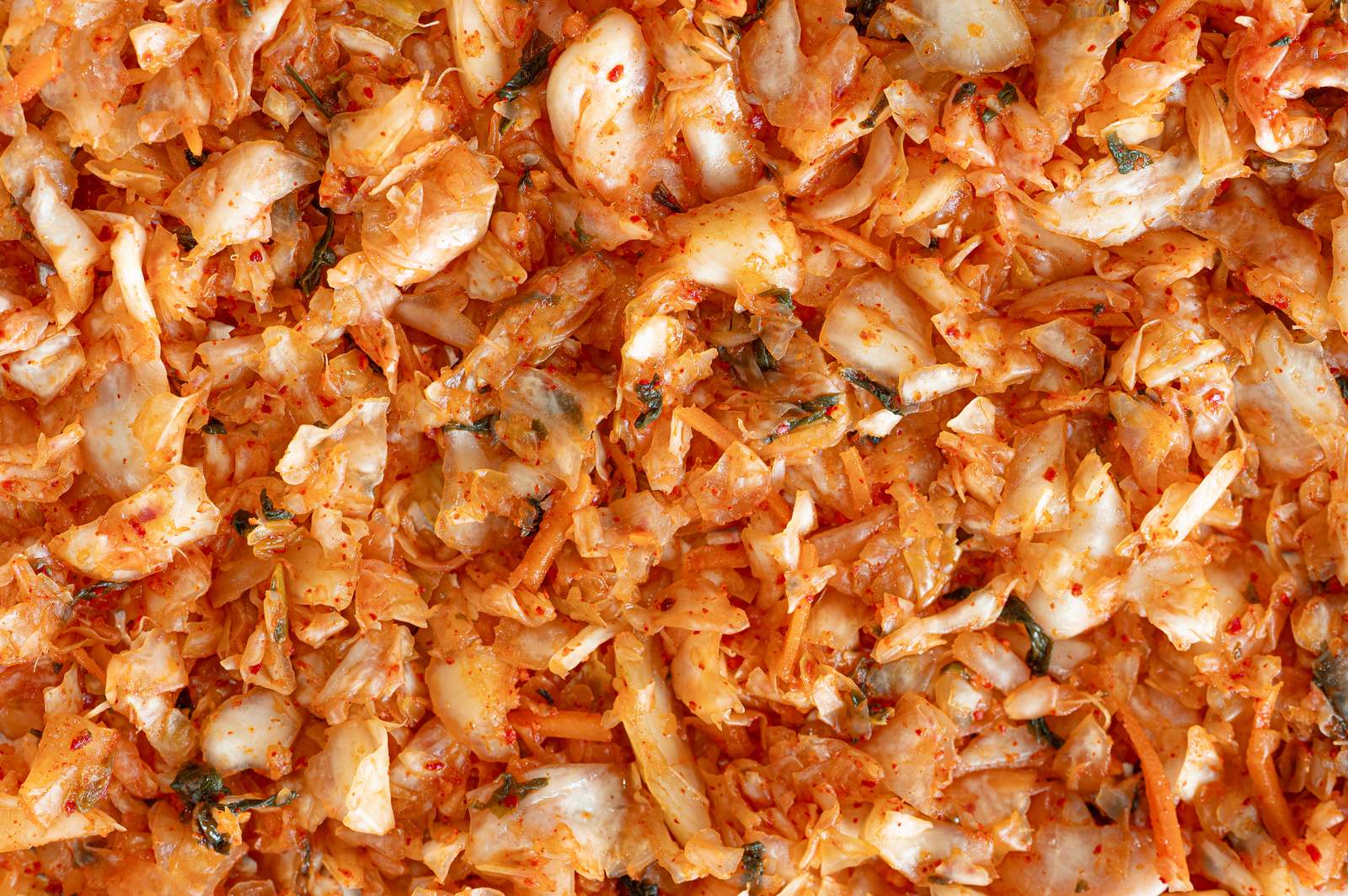
The vegetables are salted and left to soften, then rinsed and drained. The seasoning paste is mixed and worked into every leaf by hand. Everything is packed into a jar or crock, pressed down so the vegetables sit under their own brine, and left at room temperature for a day or three to get fermentation started. After that it moves to the cold, where it keeps developing slowly for weeks or months.
Kimchi is a living food, which means it is never quite the same twice. A jar that is one week old tastes crisp and bright. The same jar at two months tastes sour, funky and much more assertive, which is exactly what you want for cooking.
That patience used to be a community event. Every late autumn, Korean families gathered to make enough kimchi to last the winter, a practice called kimjang. It is still going, and it is the reason kimchi carries so much cultural weight rather than just culinary weight.
The main types of kimchi
There are hundreds of documented varieties. These are the ones you are most likely to meet.
- Baechu kimchi. Napa cabbage, red chili paste, whole leaves. This is the default, the one people picture.
- Kkakdugi. Cubed Korean radish. Crunchier and juicier than cabbage kimchi, and a standard partner for soups.
- Chonggak kimchi. Small ponytail radishes fermented whole, tops and all. Sharp and peppery.
- Oi sobagi. Cucumber stuffed with seasoning. Made fresh in summer and eaten young, while it still snaps.
- Baek kimchi. White kimchi, made with no chili at all. Mild, slightly sweet and a good starting point if heat is not your thing.
- Dongchimi. Radish fermented in a cold, clear brine you drink as well as eat. Refreshing and lightly sour.
- Geotjeori. Fresh kimchi seasoned and served the same day, closer to a spicy salad than a ferment.
What does kimchi taste like?
Sour first, then salty and savory, with a slow chili heat behind it and a garlic and ginger edge running through the whole thing. Good cabbage kimchi still has crunch in the stem even after it has fermented.
How sour depends entirely on age. Young kimchi is bright and vegetal and easy to eat straight from the jar. Older kimchi is tangier and more pungent, which sounds like a downside and is not. Aged kimchi is what Korean cooks want for stews and fried rice, because the sourness cooks down into something rich.
Is kimchi good for you?
It has a lot going for it. Kimchi is low in calories and high in vitamins A, B and C, it brings fiber from the vegetables, and because it is fermented rather than pickled in vinegar, it carries live lactic acid bacteria of the same family found in yogurt. Those are the probiotics kimchi is famous for.
It is also salty by design, so if you are watching sodium, treat it as a flavorful accent rather than a whole serving of vegetables. We wrote more about the fermentation side of things in our post on kimchi, probiotics and gut health.
How to eat kimchi
The traditional answer is: alongside rice, in a small dish, at basically every meal. The practical answer is that kimchi improves almost anything that needs acid, salt and crunch.
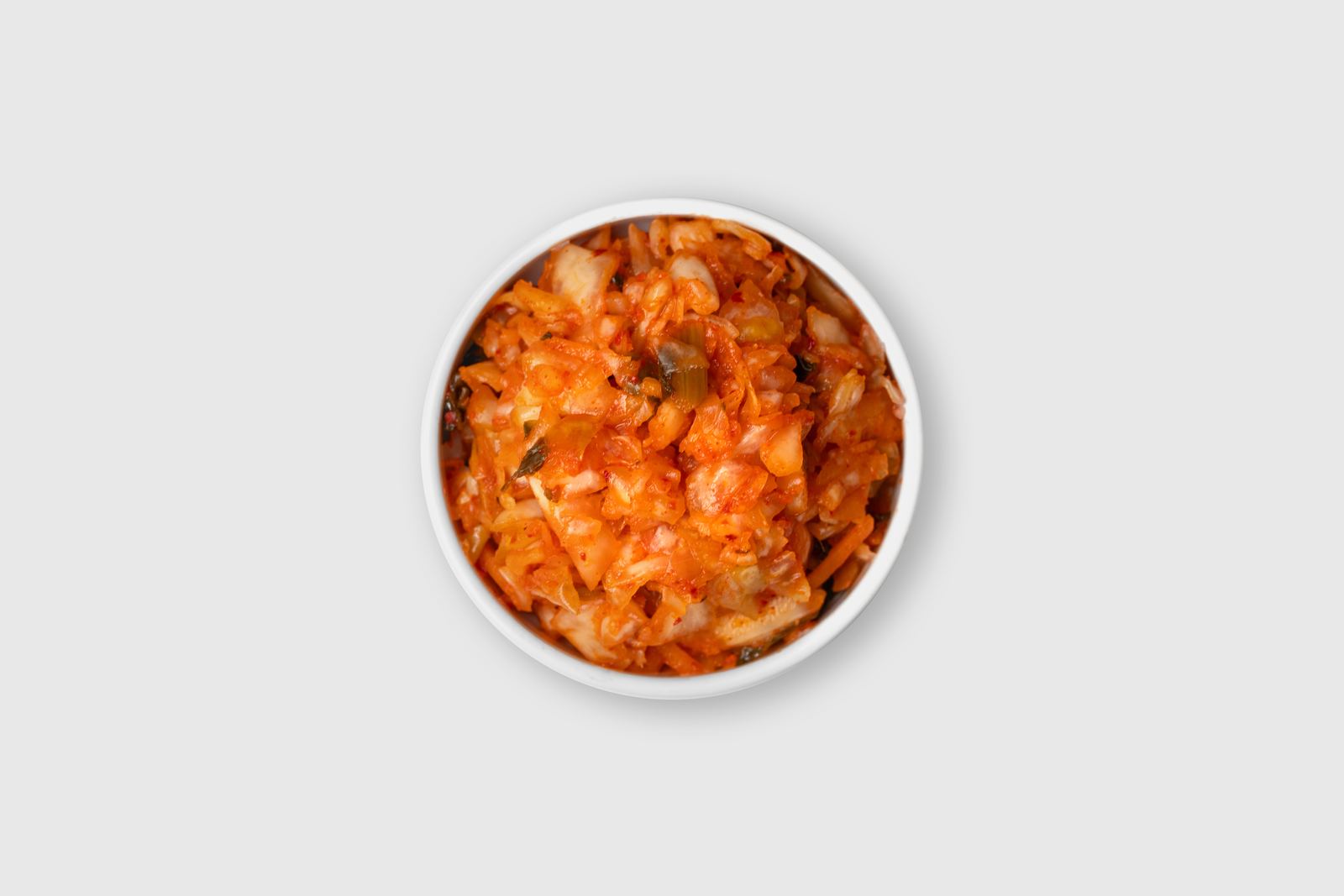
A few ways to consume it:
- Straight from the jar as a side, which is how most Koreans eat it
- Stirred into fried rice with a fried egg on top
- Simmered into kimchi jjigae, a stew that is the best possible use for a jar that has gone very sour
- Folded into a savory pancake with scallion
- Piled onto eggs, tacos, grain bowls, grilled cheese or a burger
And the easiest one: add a scoop to a bowl. Kimchi sits well next to rice, greens, grilled protein and a sauce with a little sweetness to it, which is why it works so naturally in a BIBIBOP bowl.
Try kimchi at BIBIBOP
Kimchi is one of our toppings, and it is a good introduction if you have never had it. Ours is made without fish sauce or shrimp paste, so it is friendly to vegetarian and vegan eaters, and like everything on our menu it is prepared in a kitchen that is certified gluten-free. It is low in calories and high in vitamins A, B and C, so it adds a lot of flavor for very little else. You can see the full breakdown on our nutrition page.
If you want the classic pairing, put kimchi on a bowl with Purple Rice, Roasted Sesame Broccoli and a Korean BBQ Beef or Tofu protein, then finish it with our gochujang sauce. If you want to ease in, ask for it on the side so you can taste it on its own first.
Ready to try it? Find a BIBIBOP near you and build your bowl.
Kimchi FAQs
Is kimchi vegan?
Traditional kimchi usually is not, because most recipes include salted seafood or fish sauce. Plenty of vegan versions exist, including ours, which uses seaweed for savory depth instead. If you eat plant based, check the label or ask.
Is kimchi gluten-free?
Kimchi itself is naturally gluten-free, but some commercial versions include soy sauce or wheat based thickeners, so it depends on the brand. Everything on the BIBIBOP menu is gluten-free, kimchi included.
Is kimchi spicy?
Most cabbage kimchi is mildly to moderately spicy, more warm than fiery. If you want the flavor without the heat, baek kimchi is made with no chili at all.
How long does kimchi last?
Months in the refrigerator, and it keeps fermenting the whole time. It does not really spoil so much as it gets increasingly sour. Once it is too sharp to eat plain, cook with it.
Is kimchi the same as sauerkraut?
They are cousins. Both are cabbage preserved by lactic acid fermentation. Sauerkraut is usually just cabbage and salt, while kimchi adds chili, garlic, ginger and seafood or seaweed, which makes it far more complex.
Does kimchi have to be refrigerated?
Yes, after it has started fermenting. Cold slows the process down so the flavor develops gradually instead of running away from you.