
Every September 13th is National Celiac Disease Awareness Day, a day dedicated to a condition that affects millions of people, most of whom don’t even know they have it yet. If you already know, thanks for sticking with us. If you don’t, let’s break it down.
So What Is Celiac Disease, Really?
Celiac disease is not a diet choice or a trend. It’s a genetic autoimmune condition, meaning the body’s immune system mistakes gluten for a threat and ends up attacking itself in the process, specifically the small intestine, where all our nutrients get absorbed. Over time, that reaction wears the body down and makes it harder to get the nutrients it needs. The damage is serious, and for many people, it’s irreversible.
Gluten is a lot more common in the American diet than most people think. It’s the everyday stuff: bread, pasta, cereal, baked goods. But it also hides in places you’d never expect, like soy sauce, salad dressings, soups, seasoning blends, and even some candy. That’s part of what makes celiac so hard to live with. Gluten isn’t just in a few obvious foods, it’s woven into a huge share of what’s on grocery shelves and restaurant menus.
Who Does This Affect?
An estimated 3 million Americans live with celiac disease, and most cases go undiagnosed for years. It runs in families. If a parent, sibling, or child has celiac, your own odds of having it go up too. The symptoms don’t always look the way you’d expect. You may have digestive issues, but it can also show up in the form of fatigue, joint pain, anemia, even depression. That’s a big part of why it takes people so long to get answers.
How Does It Impact Everyday Life?
Living with celiac takes more thought than most people realize. Eating out means being selective about where you go, checking menus ahead of time, and often calling a restaurant before you even show up just to ask real questions about how food is prepared. Many people navigate this by eating beforehand or even bringing their own snacks, just in case. Plenty of people default to the side salad because it’s the one thing on the menu they can trust without a conversation. Staying flexible becomes second nature, since plans can change fast if a kitchen can’t guarantee a safe option.
And because celiac doesn’t always show up in obvious ways, it can go completely unnoticed by friends, coworkers, even family. Someone might seem like they’re just “being picky” at a group dinner when really they’re doing careful math in their head about every ingredient on the table. That invisible effort is exactly why places that make gluten-free easy, not just possible, matter so much.
What Gluten Actually Does to the Body
Here’s the upside of understanding this: once you know how gluten affects the body, everything about the gluten-free lifestyle starts to make sense. For someone with celiac, gluten acts as a trigger. Even a small amount can set off an immune response, chipping away at the body’s ability to absorb calcium, iron, and other nutrients it needs. There’s no medication for it yet, so the treatment is a strict, lifelong gluten-free diet. The good news? A gluten-free diet, done right, lets people feel like themselves again. That’s exactly why trust matters so much when someone with celiac sits down to eat somewhere that isn’t their own kitchen.
Why We Care About This Day
Awareness changes outcomes, and that’s worth celebrating! It shortens the years people spend searching for answers. It also pushes restaurants like BIBIBOP to earn trust by making an intentional effort to be completely gluten-free, not just claiming it. For the celiac community, a meal out isn’t about flavor first. It’s about feeling safe first, then getting to enjoy every bite.
How BIBIBOP Built Gluten-Free In, Not Just Around It
BIBIBOP actively supports and builds toward a happy, healthy lifestyle for every guest who walks through our doors, and that starts with what goes into the bowl. For instance, take soy sauce: traditional Asian cooking leans hard on it for flavor, but traditional soy sauce is brewed with wheat, which means gluten is hiding in a lot of dishes people would never think to question. At BIBIBOP, we use tamari instead, and it delivers that same deep, savory flavor with none of the gluten. Best of both worlds.
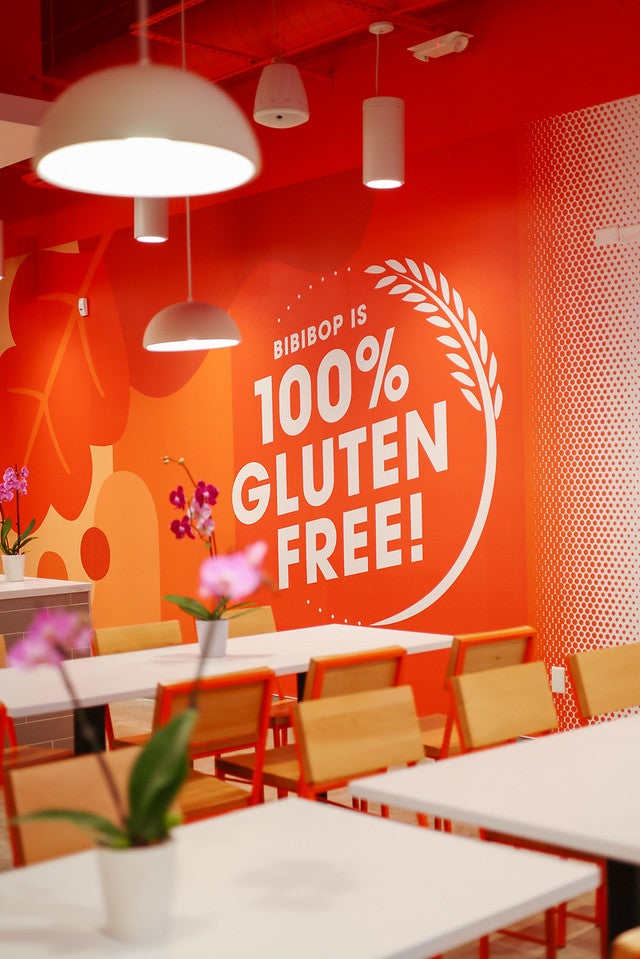
And tamari is just the start. We’re a fully certified gluten-free kitchen, top to bottom. Our team worked closely with our suppliers and chefs to build proprietary gluten-free products from scratch, made to deliver the bold flavor BIBIBOP is known for without cutting corners on safety. Every sauce (yum yum included), every protein, every component was built with this in mind.
So when someone with celiac disease walks up to our line, they get to skip the menu interrogation. They can just order, build the bowl they’re craving, and dig in. At BIBIBOP, there’s something for everyone.
A Little Something Sweet, On Us
We’re celebrating with you! BIBIBOP Loyalty members get a free gluten-free cookie between September 10th and September 13th. Choose snickerdoodle or chocolate chip. Everyone at the table can grab one without a second thought.
Download the app and sign up by September 9th so the reward lands in your account in time. Trust us, you’ll want it there.
From our BIBIBOP family to yours, thank you for trusting us with your bowl.