

Korean food is one of the easier cuisines to eat plant-based. Rice, vegetables, tofu and fermented soybean pastes sit at the center of the table, and some of the most famous dishes are vegetarian at heart.
The catch is that animal products show up in places you would not think to look: fish sauce in kimchi, anchovy broth in stews, egg in the pancake batter. Here is what to order, what to ask about, and how to build a vegan or vegetarian BIBIBOP bowl.
The short answer. Bibimbap, japchae, vegetable kimbap and seasoned vegetable sides are easy to order vegetarian or vegan with a few changes. Kimchi, stews and tteokbokki are the ones to ask about, because they often carry fish sauce, salted shrimp, anchovy broth or fish cake.
Why Korean food works for plant-based eaters
A Korean meal is built around rice and a spread of small side dishes called banchan. Many of those sides are namul, vegetables that are blanched or sautéed and seasoned with sesame oil, garlic and salt. Protein often comes from tofu and from jang, the fermented soybean pastes and sauces: doenjang, gochujang and ganjang.
There is also a long tradition of meatless cooking. Korean Buddhist temple food leaves out meat and seafood seasonings entirely. It also skips five pungent vegetables, scallions, garlic, chives, wild chives and Chinese squill, which are believed to distract from meditation. Most Korean restaurant food is not temple food, but the tradition is one reason so many vegetable dishes are so well developed.
Korean dishes that are easy to order vegetarian or vegan
Bibimbap
Rice topped with seasoned vegetables and gochujang. Ask for it without the fried egg and the beef, and check whether the sauce has fish sauce in it. Read more in our guide to what bibimbap is.
Japchae
Chewy glass noodles made from sweet potato starch, stir-fried with vegetables. The noodles are vegan. Restaurants often add beef, and some use oyster sauce, so ask for it without both.
Namul
Seasoned vegetable sides like spinach, bean sprouts and fernbrake. Many are vegan as served. Some cooks add fish sauce, so it depends on the kitchen.
Vegetable kimbap
Rice and vegetables rolled in seaweed. The standard vegetable version is close to vegan, but it often includes a strip of egg. Ask for it without.
Dubu jorim
Tofu braised in a sauce of soy sauce, garlic and chili. Usually meatless. Ask whether the sauce is made with anchovy stock.
Doenjang jjigae
Soybean paste stew with tofu and vegetables. The paste is vegan, but the broth is often anchovy-based. Ask for vegetable broth instead.
Vegetarian, but not vegan
A few favorites are meatless but contain egg or dairy.
- Pajeon. Scallion pancakes. The batter almost always has egg, and restaurant versions often add seafood.
- Gyeran-jjim. Fluffy steamed egg, served bubbling in a stone pot.
- Bibimbap with the egg. The classic version tops the bowl with a fried egg.
Where animal ingredients hide
None of these ingredients are usually listed on a menu, so it pays to ask.
In kimchi
Most traditional kimchi is made with fish sauce or salted shrimp for savory depth. Vegan kimchi uses seaweed or other plant ingredients instead. Learn more in What Is Kimchi?
In soups and stews
Anchovy broth is the default base for many Korean soups and stews, including soft tofu stew and soybean paste stew.
In tteokbokki
The spicy rice cakes themselves are plant-based, but they are often cooked with fish cake, and the sauce may start from anchovy stock.
In sauces and side dishes
Fish sauce and oyster sauce turn up in namul, stir-fries and japchae. Traditional gochujang is made from chili, rice, fermented soybeans and salt, but check the label on any jar.
How to build a vegan bowl at BIBIBOP
A BIBIBOP bowl is built the same way a bibimbap is: a base, vegetables, a protein and a sauce. BIBIBOP’s whole menu is gluten-free, so a plant-based bowl is gluten-free too.
Pick a base. Purple Rice, White Rice, Sweet Potato Noodles or Crispy Romaine.
Add Organic Tofu. The plant-based protein on the line, made from soybeans.
Pile on toppings and finish with sauce. Kimchi, Curry Chickpeas and vegetables, then Gochujang, Spicy Sriracha, Teriyaki or Sesame Ginger.
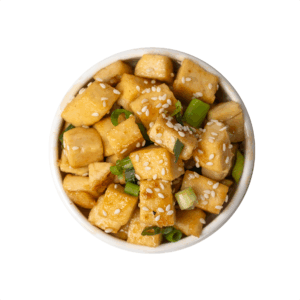
Organic Tofu
Made from soybeans and the protein to build a plant-based bowl around. It holds up well against bold toppings like Kimchi and a spicy sauce.
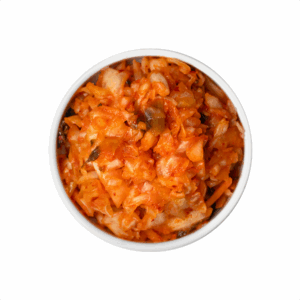
Kimchi
BIBIBOP’s Kimchi is made without fish sauce or shrimp paste. It uses seaweed for savory depth instead, so it is vegan. It is 10 calories a serving.
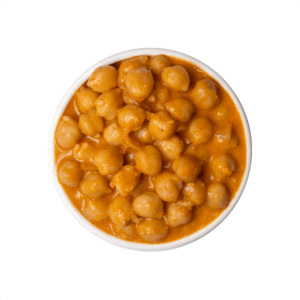
Curry Chickpeas
Chickpeas simmered in a mild curry and coconut milk sauce. Vegan, warm and filling, with a little extra plant protein. More in Are Chickpeas Healthy?
Round it out with Carrots, Corn, Cucumber, Black Beans, Bean Sprouts, Roasted Sesame Broccoli, Pickled Red Onion, Potatoes, Pineapple and Avocado.
What to add for a vegetarian bowl
Purple Rice, White Rice, Sweet Potato Noodles, Crispy Romaine, Organic Tofu, Kimchi, Curry Chickpeas, Carrots, Corn, Cucumber, Black Beans, Bean Sprouts, Roasted Sesame Broccoli, Pickled Red Onion, Potatoes, Pineapple, Avocado, Gochujang, Spicy Sriracha, Teriyaki, Sesame Ginger.
Cage-Free Egg and Cheese. Yum Yum Sauce, which contains egg and dairy. Honey Citrus Kale, which is dressed with honey.
One thing to know. BIBIBOP is not a vegan kitchen. Meat, fish, egg and dairy are prepared in the same kitchens as the plant-based items. If cross-contact matters to you, let the team at your location know when you order. BIBIBOP’s full nutrition and allergen guide, linked from the nutrition page, marks every vegan item.
Three bowls to try
- The Korean classic (vegan). Purple Rice, Organic Tofu, Kimchi, Bean Sprouts, Carrots and Roasted Sesame Broccoli, finished with Gochujang. The closest thing to a vegan bibimbap.
- Warm and hearty (vegan). White Rice, Organic Tofu, Curry Chickpeas, Black Beans, Corn and Avocado, with Spicy Sriracha.
- Creamy (vegetarian). Honey Citrus Kale, Organic Tofu, Cage-Free Egg, Cucumber, Pickled Red Onion and Carrots, with Yum Yum Sauce.
Vegan and vegetarian Korean food FAQs
Is Korean food vegan-friendly?
More than most people expect. Rice, vegetables, tofu and soybean pastes are central to Korean cooking. The things to ask about are fish sauce, salted shrimp, anchovy broth, fish cake and egg, which are common but rarely listed on menus.
Is kimchi vegan?
Traditional kimchi usually is not, because it is made with fish sauce or salted shrimp. Vegan versions use seaweed or other plant ingredients instead. BIBIBOP’s Kimchi is vegan.
Is bibimbap vegetarian?
It is easy to make vegetarian. The classic version is topped with beef and a fried egg. Without the beef it is vegetarian, and without the egg as well it can be vegan, as long as the sauce has no fish sauce.
Is japchae vegan?
The sweet potato glass noodles are vegan. Restaurant japchae often includes beef and sometimes oyster sauce, so ask for it without both.
Is gochujang vegan?
Traditional gochujang is made from chili, glutinous rice, fermented soybeans and salt, so it is usually vegan. Recipes and commercial jars vary, so check the label.
What can vegans eat at BIBIBOP?
Any base except Honey Citrus Kale, Organic Tofu, Kimchi, Curry Chickpeas and the vegetable toppings, finished with Gochujang, Spicy Sriracha, Teriyaki or Sesame Ginger. Skip Cage-Free Egg, Cheese, Yum Yum Sauce and Honey Citrus Kale.
Build your plant-based bowl
Korean food has always made room for vegetables. A BIBIBOP bowl makes it simple. Find a BIBIBOP near you and build yours today. New to BIBIBOP? Join BIBIBOP Rewards and your first bowl is on us with a minimum $5 spend.